The Practice Debate
Golfers have been hitting buckets of balls at driving ranges for decades. It's familiar, accessible, and relatively affordable. But with indoor golf simulators becoming more widespread and technology-rich, many golfers are questioning whether their range sessions are actually the most effective use of their practice time.
Let's break down the comparison objectively.
Data and Feedback
Driving Range: You hit a ball. You watch it fly. You estimate where it landed. You guess at what went wrong or right. Unless you bring your own portable launch monitor (typically $2,000-$20,000), you're practicing without objective feedback.
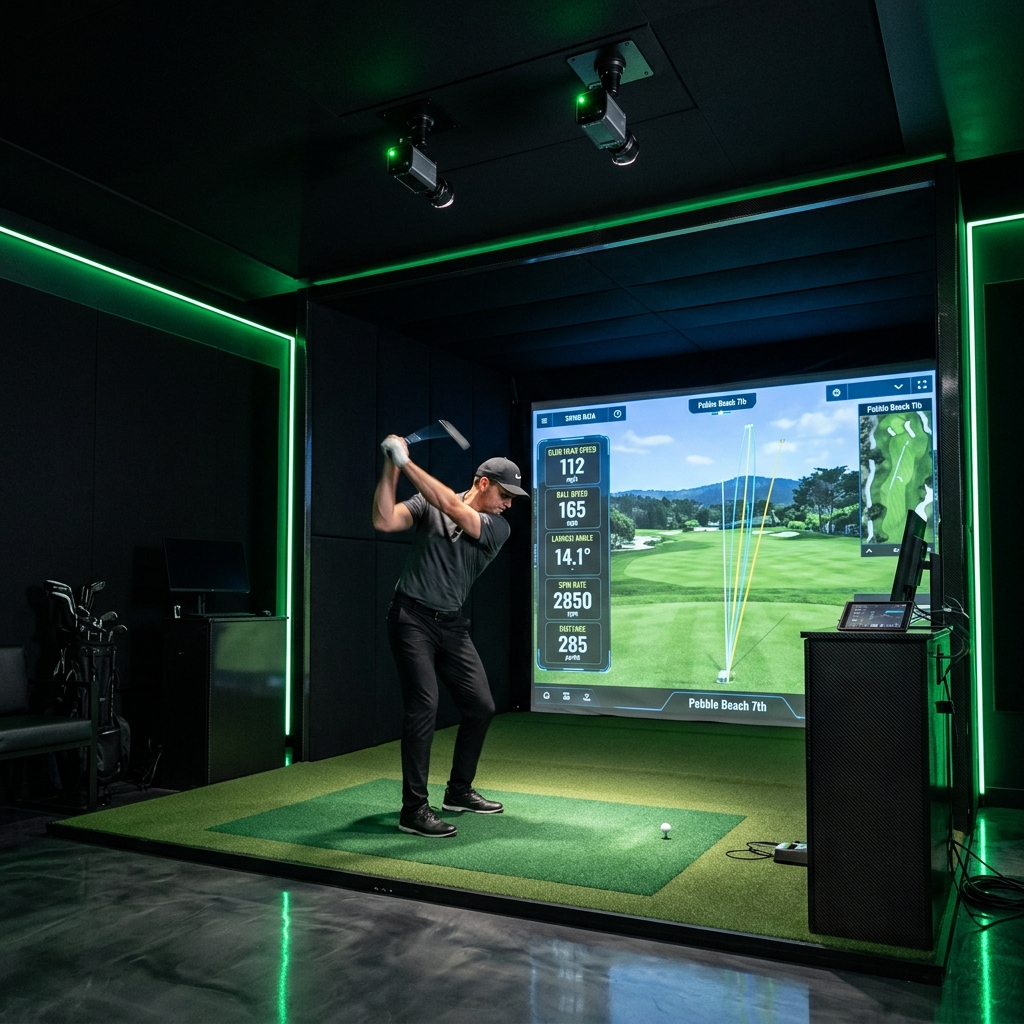
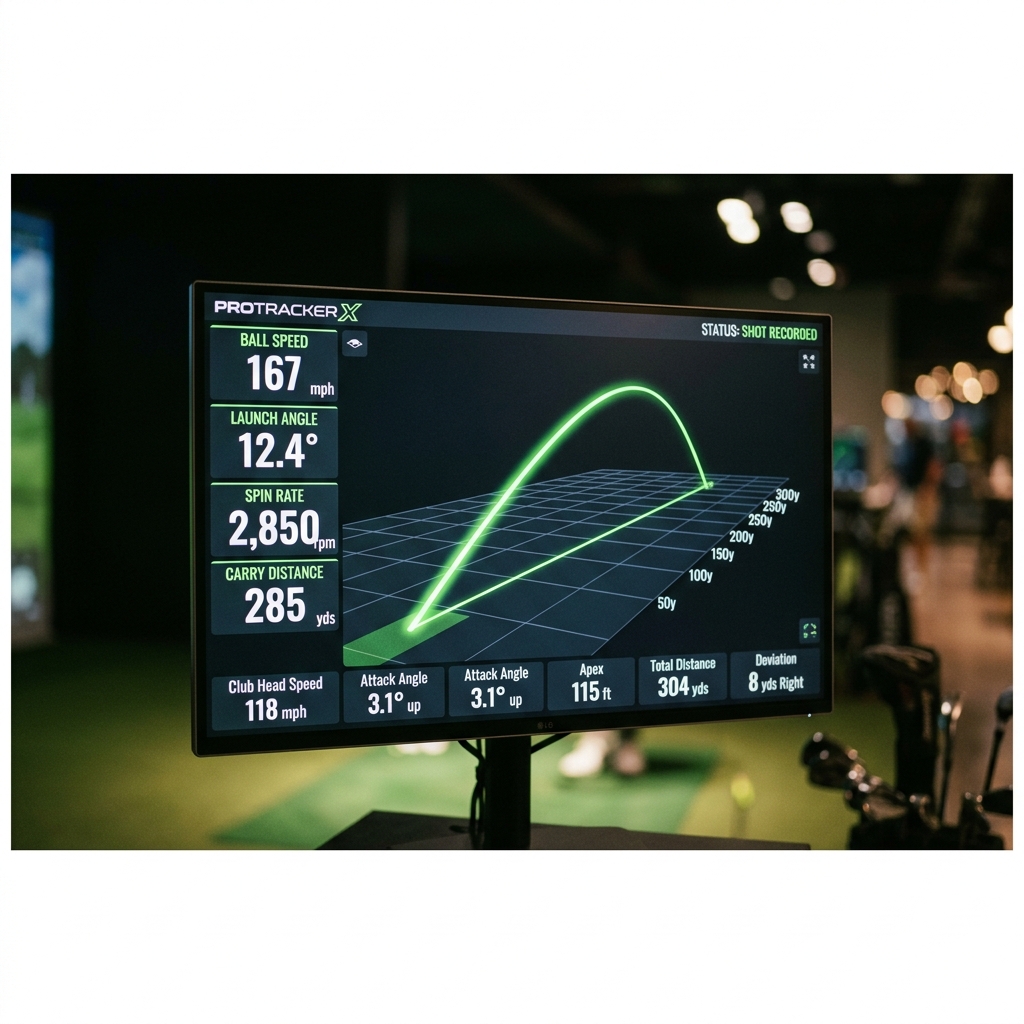
Golf Simulator: Every single swing generates precise data — ball speed, launch angle, spin rate, club path, face angle, carry distance, total distance, and more. You know exactly what happened on every shot. At Bay24, Swing Lab adds video analysis on top of launch monitor data, showing you exactly why each shot flew the way it did.
Winner: Simulator, by a wide margin. Practicing without data is like going to the gym without tracking your weights — you might feel productive, but you can't measure progress.
Cost Per Hour
Driving Range: A large bucket of balls costs $10-20 and lasts 45-60 minutes for most golfers. No data, shared hitting bays, and you're exposed to weather.
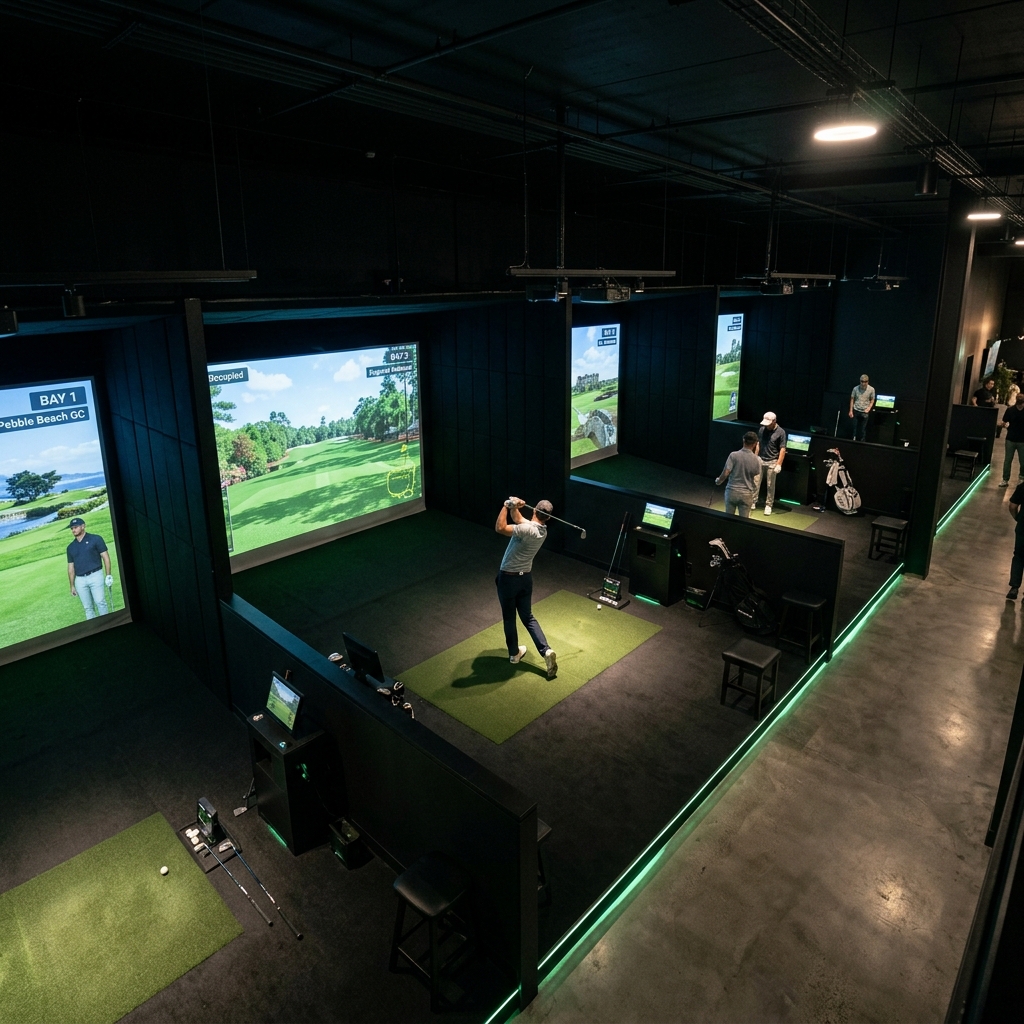
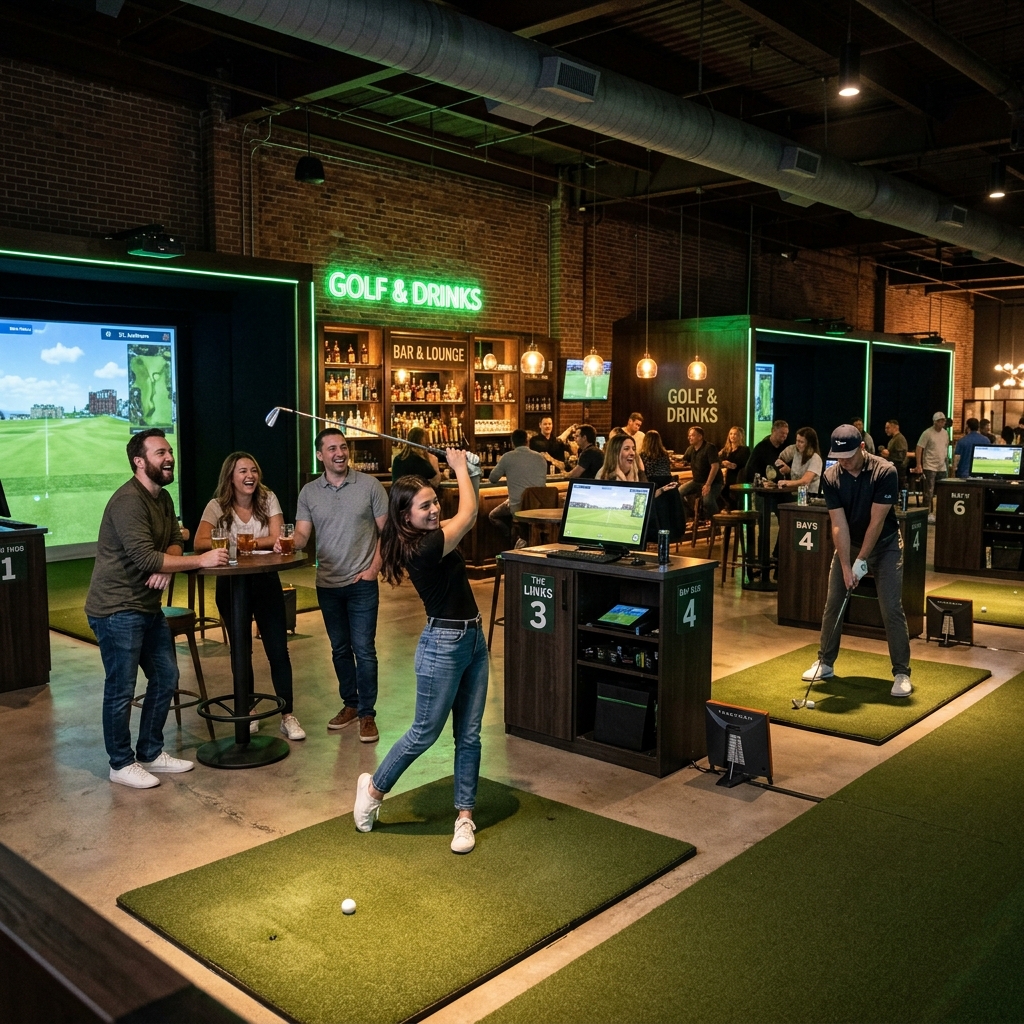
Golf Simulator: Bay24 sessions typically run $30-60 per hour. Bay24 members pay less with discounts up to 15%. You get a private bay, professional data on every swing, AI swing analysis, and access to 1,000+ courses.
Analysis: Simulators cost more per hour, but the value per dollar of practice is significantly higher. One hour of data-driven practice with video feedback is worth several hours of mindless range hitting.
Weather and Availability
Driving Range: Closed at night. Closed in heavy rain, snow, or extreme heat. Seasonal in most of the country. Limited hours even in good weather.
Golf Simulator: Open 24/7, 365 days a year. Temperature controlled. No wind, rain, or darkness to interrupt your session. Bay24 locations are open around the clock, including unmanned during off-peak hours.
Winner: Simulator. Not close.
Practice Quality
Driving Range: Good for building rhythm and working on ball striking. Limited by range ball quality (range balls fly shorter and spin less), uneven mats, and no target feedback beyond visual estimation. Rarely simulates on-course situations.
Golf Simulator: Practice with your real ball data. Play actual courses that require strategic thinking, club selection, and shot shaping. Work on specific distances, trajectories, and shot shapes with immediate data validation. Swing Lab provides AI coaching on your mechanics.
Winner: Simulator for deliberate practice. Driving range for pure volume hitting.
The Verdict
Both have their place, but for golfers serious about improvement, indoor simulators offer a dramatically better return on practice time. The combination of precise data, video analysis, weather independence, and strategic course play creates a practice environment that traditional ranges simply can't match.
Ready to try it? Find your nearest Bay24 location and book your first session.