The Engine Behind Every Simulator
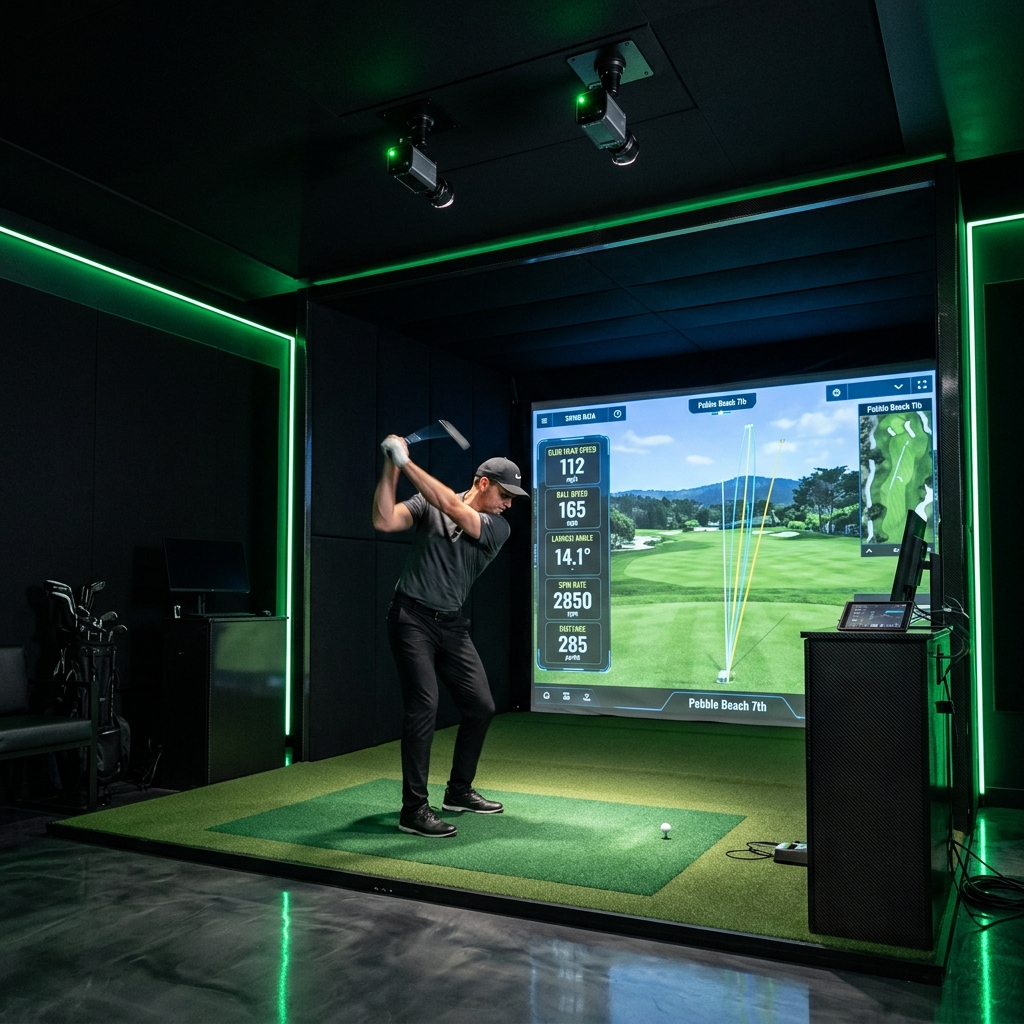
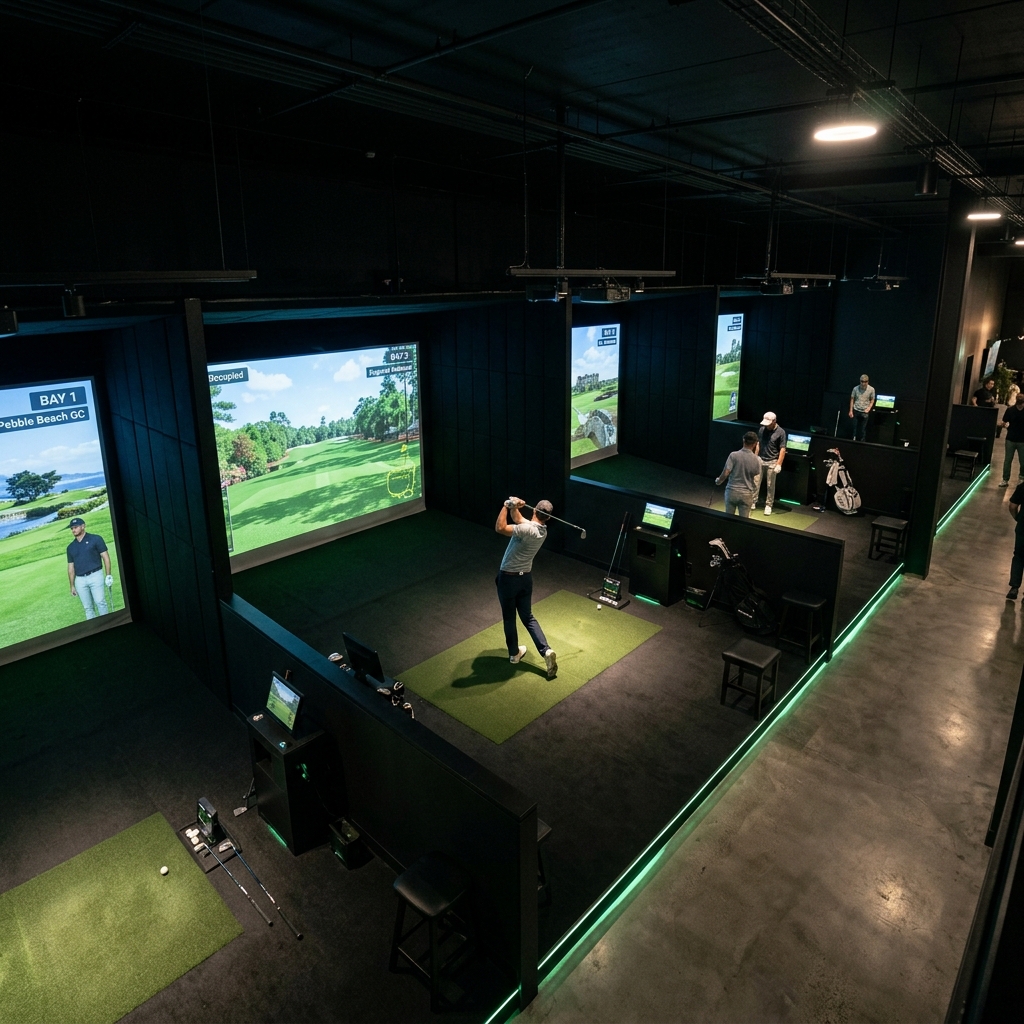
Walk into any Bay24 bay and the first thing you'll notice is the massive projection screen. But the real magic happens behind you — in the launch monitor. This device is the engine that powers the entire simulation, tracking your club and ball at the moment of impact with remarkable precision.
Understanding how this technology works helps you get the most out of every session, whether you're a scratch golfer fine-tuning your approach game or a beginner learning the basics.
Two Approaches to Ball Tracking
Modern launch monitors use one of two primary technologies:
Doppler Radar — Systems like TrackMan use radar waves to track the ball from impact through its entire flight. The radar continuously measures the ball's position in 3D space, calculating speed, spin, and trajectory. Radar-based systems excel at measuring full ball flight and are the gold standard for outdoor professional fitting.
Photometric (Camera-Based) — Systems like Uneekor use high-speed cameras mounted above or behind the hitting area. Multiple cameras capture images of the ball and club at incredibly high frame rates — typically 2,000 to 10,000 frames per second. Computer vision algorithms then analyze these images to calculate ball speed, spin axis, launch angle, and club delivery data.
What Gets Measured
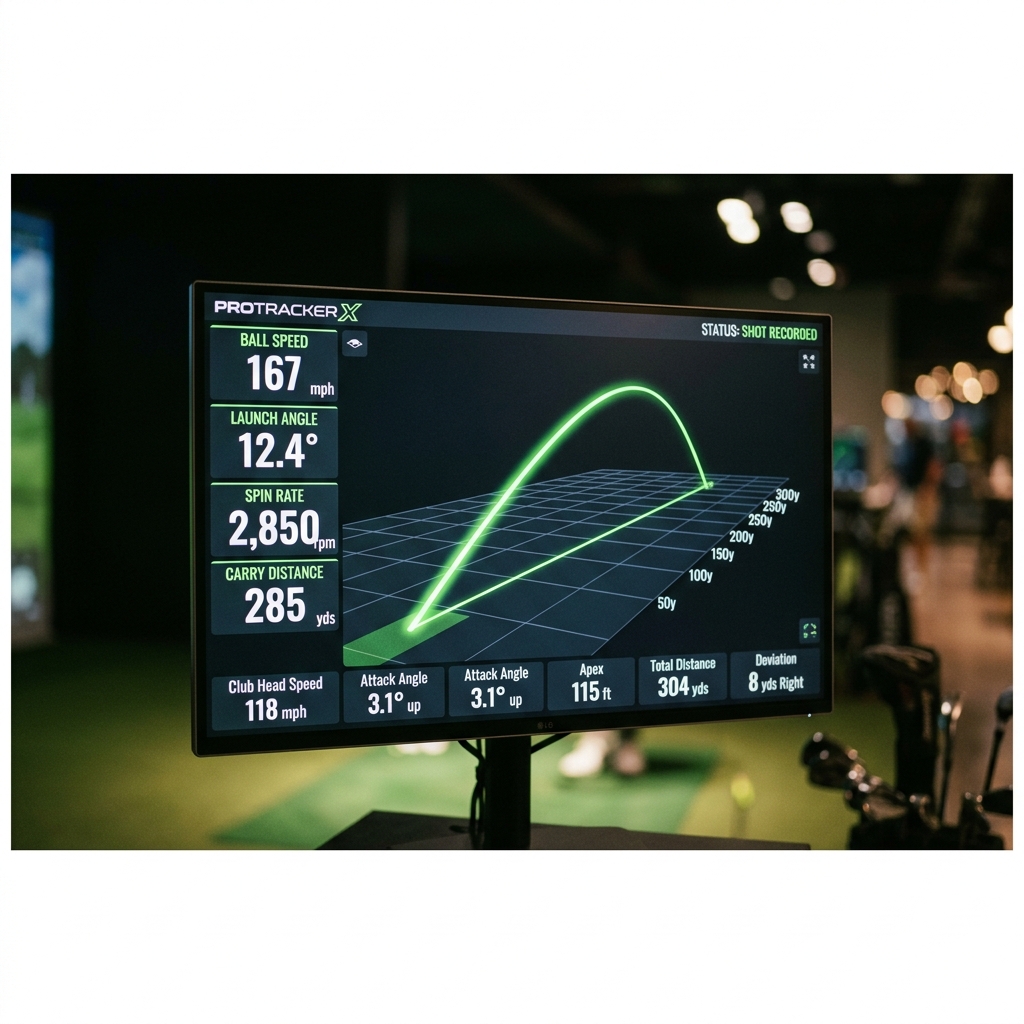
Modern launch monitors track an impressive array of data points on every single swing:
- Ball Speed — The velocity of the ball immediately after impact, typically measured in mph. This is the single most important factor in determining distance.
- Launch Angle — The vertical angle at which the ball leaves the clubface. Combined with ball speed and spin rate, this determines your trajectory and carry distance.
- Spin Rate — Measured in RPM (revolutions per minute), spin rate affects how the ball behaves in the air and on landing. Higher spin means more lift and a steeper descent angle.
- Spin Axis — The tilt of the ball's spin axis, which determines curvature. A tilted spin axis produces draws and fades (or hooks and slices).
- Club Speed — How fast the clubhead is moving at impact. More club speed means more potential ball speed.
- Club Path — The direction the clubhead is traveling at impact relative to the target line. This is a primary factor in shot shape.
- Face Angle — Where the clubface is pointing at impact. The relationship between face angle and club path determines your shot's starting direction and curvature.
- Smash Factor — The ratio of ball speed to club speed. A higher smash factor means more efficient energy transfer — you're hitting the sweet spot.
Why Accuracy Matters
Indoor golf is only as good as its data. If the launch monitor misreads your spin rate by 500 RPM or your launch angle by 2 degrees, the simulated ball flight on screen won't match what would happen on a real course. That's why Bay24 venues use industry-leading launch monitors that deliver accuracy within 1-2% of outdoor measurements.
This level of accuracy means the feedback you get during a Bay24 session is genuinely useful for improving your real-world game. The distance you carry your 7-iron in a Bay24 bay is the distance you'll carry it at your local course.
The Bay24 Advantage
At Bay24, we pair launch monitor data with Swing Lab's AI analysis to give you the complete picture. While the launch monitor tells you what the ball did, Swing Lab tells you why — connecting your physical mechanics to the resulting ball flight. It's a combination that turns every session into a productive practice opportunity.